Two Weeks Without Power in Indiana: Why White Mountains Homes Need a Solar Battery Backup Kit
Gary, Indiana Just Went Two Weeks Without Power. Could Your White Mountains Home Handle That?
On August 11, a line of storms with wind gusts near 100 mph tore through northwest Indiana. Twelve days later, more than 20,000 NIPSCO customers were still in the dark, about 17,000 of them in the city of Gary. Schools stayed closed. The National Guard was called in. Families lined up at distribution centers for food and water while the utility worked toward a restoration date of August 25.
Two weeks. Not two hours. Two weeks with no refrigerator, no well pump, no CPAP, no lights, in the middle of summer.
Here in the White Mountains we tend to think of outages as a short annoyance. A monsoon cell rolls through Snowflake, the power blinks, the well pump goes quiet for an hour, then it all hums back to life. But the pattern across the country this summer says the short outage is no longer the only outage worth planning for. At White Mountains Solar in Show Low, more of the calls we get now start with the same question: what happens if it does not come back on for days?
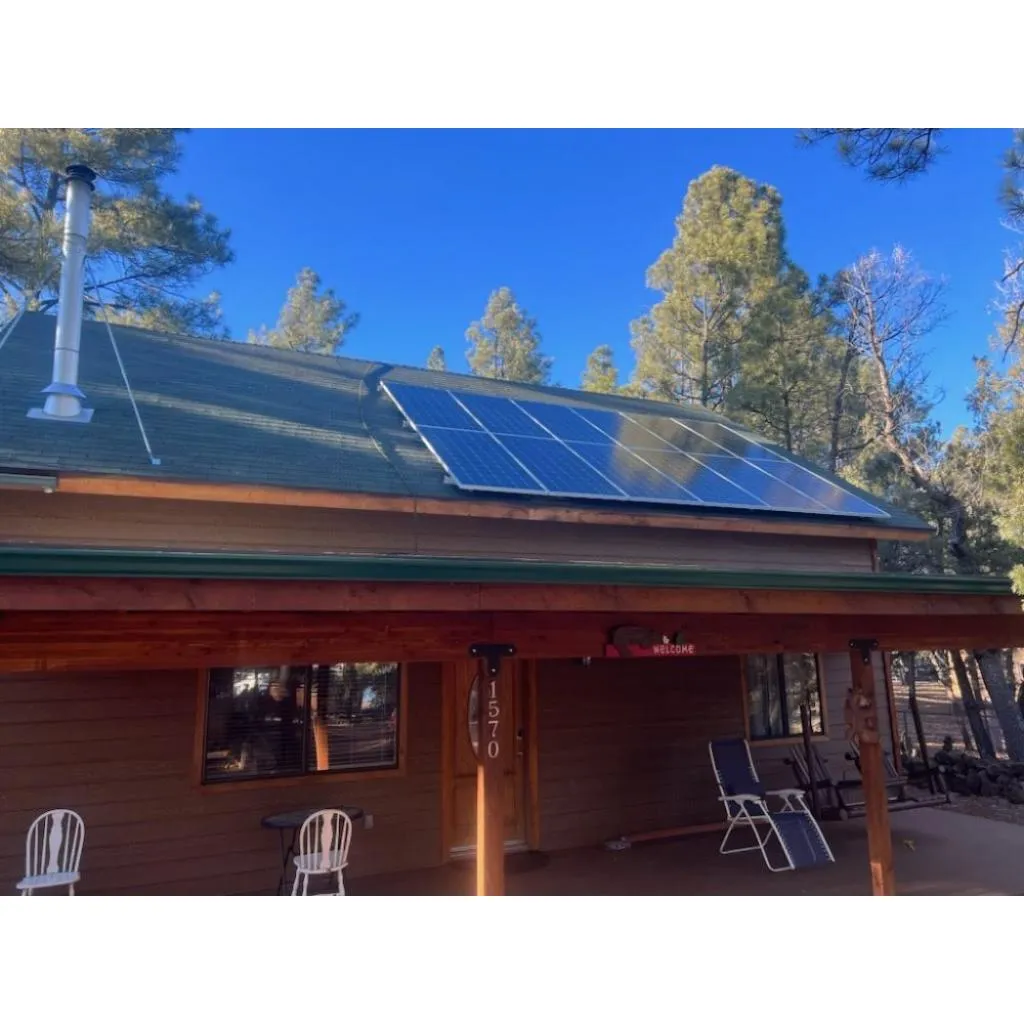
Rooftop solar in the White Mountains. Panels alone do not keep the lights on in an outage. Batteries and a hybrid inverter do.
It Was a Rough Month for the Grid, and Not Just in Indiana
Indiana got the headlines, but it was not alone. A quick look at the last few weeks:
Phoenix, August 9 and 10. A single monsoon storm snapped more than 120 power poles across the West Valley. About 23,000 APS customers lost power that night, and thousands were still out the next morning. An APS spokesperson said it had been a very long time since a storm caused that much damage.
Phoenix again, August 19 and 20. A wall of dust and 68 mph winds knocked out power to roughly 17,000 customers in Maricopa County and more than 1,000 in Pinal County.
17 states under an emergency order. From late July into the first days of August, the U.S. Department of Energy ordered the Southwest Power Pool to fire up backup generation across a 17-state region to head off blackouts during extreme heat. The department put the annual cost of power outages to Americans at 44 billion dollars.
The Mid-Atlantic in early July. With 160 million people under heat alerts, the Energy Secretary issued an emergency alert directing PJM, the grid operator for 65 million customers, to curtail power to data centers and other large users to avoid blackouts.
Notice the pattern. Storms are the trigger, but the grid is running with less margin than it used to, and it takes longer to recover when something breaks.
Why Data Centers Keep Showing Up in Outage Stories
The biggest new load on the American grid is the AI data center. The International Energy Agency now projects that global data center electricity use will roughly double between 2025 and 2030. Utilities are rewriting their capital plans in real time to keep up, and a national poll released in late August found that higher electricity bills are the number one concern Americans have about data centers.
Arizona is squarely in the middle of this. Big data center campuses are being built in the Phoenix metro, and the power to run them comes from the same regional grid that feeds the White Mountains. When the grid is tight, the utility's first job is to keep the biggest and most populated load centers stable. Rural mountain communities are not first in line.
Why the White Mountains Feel Grid Trouble First
Show Low, Snowflake-Taylor, Pinetop-Lakeside, Concho, Saint Johns, Vernon, White Mountain Lakes, and Shumway all sit at the far end of long transmission runs through forest and high desert. Whether your power comes from Navopache Electric Cooperative or APS, the physics are the same:
Long lines, more exposure. Miles of poles through pines and open country mean more places for wind, lightning, and falling trees to cause a fault.
Fewer alternate paths. In a city, power can be rerouted around a damaged section. Out here there is often one way in.
Crews are spread thin. Line crews cover a huge territory. When a big storm hits, restoration works from the most customers per repair down to the fewest. Rural homes are usually last.
Wells, not city water. When the power drops, so does your water pressure. A two-day outage here is a water problem, not just a lighting problem.
That is exactly why the Snowflake well pump story matters. A one-hour blip is a preview of what a multi-day event would feel like, with the clock running much longer.

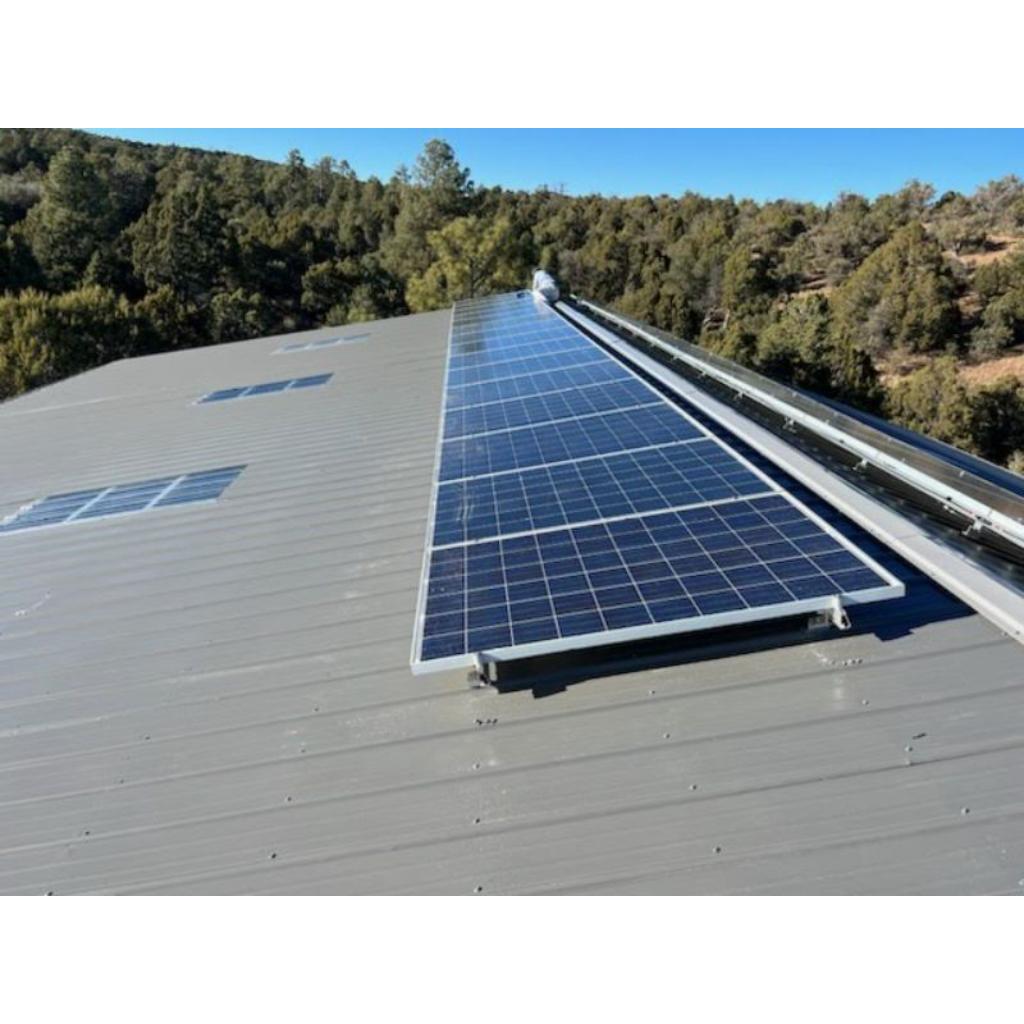
A prebuilt White Mountains Solar battery and inverter kit installed in a White Mountains home. It arrived programmed and tested from our Show Low shop.
What a Solar Battery Backup Kit Actually Does During a Long Outage
A generator gets you through a night. A solar battery backup kit gets you through as many days as the sun keeps coming up, which in the White Mountains is most of them. Here is how it plays out in a real outage:
The hybrid inverter switches over automatically. Your essential circuits, including the well pump, fridge, freezer, lights, internet, and medical equipment, keep running off the batteries. Most homeowners do not notice the exact moment the grid went down.
The batteries carry you overnight. A properly sized lithium battery bank runs the essentials from sunset to sunrise.
The panels recharge the batteries every day. Day two, day five, day twelve. As long as the sun is up, you are refilling your own power supply. No gas cans, no trips to a station that may also be without power.
No fuel, no fumes, no noise. That also means no conflict with red flag fire restrictions, which matter a lot around here in a dry summer.
If Gary, Indiana had happened in Show Low, a home with one of our kits would have had running water and a cold refrigerator every one of those twelve days.
Our Kits Arrive Ready to Run on Day One
Here is where White Mountains Solar is different from the boxes you can order online. Every one of our solar battery backup kits is pre-built, pre-programmed, pre-assembled, and tested in our Show Low shop before it leaves. When it gets to your house, the inverter, charge controllers, breakers, and battery connections are already done and already configured for the White Mountains. If you are a DIY customer, your job is to connect the solar panels and the batteries to the unit. That is it.
We build kits at every size:
Starter kits for a well pump, fridge, and lights, so you never lose water again.
Mid-size kits that cover the essentials plus a heat pump mini-split or a shop.
Whole-home systems, like our 6kW EG4 full kit with four lithium batteries and sixteen panels, sized to run a normal household through a multi-day outage.
Hybrid inverters sold on their own for technical and DIY-savvy customers who want to design their own system.
New and used solar panels, so there is an entry point for every budget. Used panels are a smart way to add capacity for less.

Kits leave our shop prebuilt, programmed, and tested, so day one at your home is plug in and power up.
Not sure what size fits your home? Send us a quick message with your address and the loads you want covered, and we will size it for you. Or call 928-251-0114 and talk to a real person in Show Low.
Proudly Serving the White Mountains
White Mountains Solar has been selling and installing solar kits from Show Low since 2009. We serve homeowners, ranches, and cabins across:
Show Low, AZ
Snowflake-Taylor, AZ
Pinetop-Lakeside, AZ
Concho, AZ
Saint Johns, AZ
Vernon, AZ
White Mountain Lakes, AZ
Shumway, AZ
No Money Down Financing Available
Get a real solar battery backup kit in place before the next storm season, not after. Ask about no-money-down financing when you call.
Do Not Wait for a Two-Week Outage to Find Out
The families in Gary did not think it could happen to them either. Talk to a local installer who knows White Mountains weather, wells, and winters, and get a kit that is ready to run the day it arrives.
Contact Us | Call 928-251-0114 | Visit wmsolaraz.com | Find Us on Google Maps
